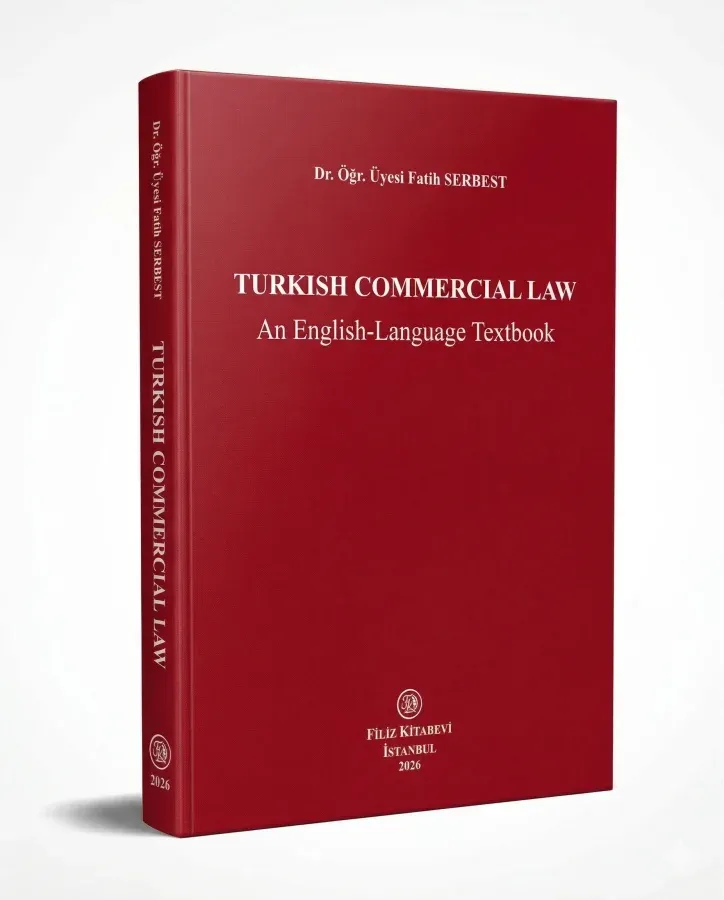
Turkish Commercial LawAn English-Language Textbook
ABOUT THE AUTHOR III
ACKNOWLEDGEMENTS V
ABOUT THE BOOK VII
TABLE OF CONTENTS IX
ÖZET XXIX
ABSTRACT XXX
Chapter 1 - Introduction to Turkish Commercial Law: Nature, Function, and Sources 1
I. Commercial Law and the World of Trade 2
II. What Is “Commercial Law”? 3
III. Turkish Commercial Law within the Turkish Legal System 4
A. The Turkish Commercial Code as a Component of Private Law 4
B. “Commercial Provisions” and the Method of Gap-Filling 5
C. Commercial Custom and Trade Usage 6
D. The International Context of Turkish Commercial Law 7
IV. Core Concepts: Commercial Enterprise, Merchant, Commercial Acts, and Commercial Cases 8
A. The Commercial Enterprise (Ticari İşletme) 9
1. Definition and elements. 9
2. The enterprise as a legal whole. 10
3. The enterprise criterion in practice. 10
B. The Merchant (Tacir) 11
C. Legal Consequences of Being a Merchant 11
D. Commercial Acts and the Commercial Character of Transactions 13
E. Commercial Cases and Specialised Adjudication 13
V. The Architecture of Turkish Commercial Law: Main Fields and Their Logic 14
VI. Characteristic Features of Commercial Law 16
A. Speed, Predictability, and the Costs of Uncertainty 16
B. Documentation, Evidence, and the Legal Life of Commercial Paper 17
C. Standard Terms and the Economics of Repetition 18
D. Commercial Custom, Trade Usage, and “Non-State” Norms 19
E. Good Faith, Market Trust, and the Protection of the Good-Faith Participant 20
F. Risk Allocation, Credit, and Insolvency Sensitivity 20
VII. Historical Development: From Lex Mercatoria to the Turkish Commercial Code 21
A. The Law Merchant and the Emergence of Transnational Commercial Norms 21
B. Codification and the National Commercial Codes 22
C. Modern Developments: International Harmonisation and Private Rule-Making 22
D. Turkish Commercial Law in Historical Perspective 23
VIII. Competing Models for Defining the Scope of Commercial Law 24
A. The Subjective Model: Merchant Status as the Gateway 24
B. The Objective Model: Commercial Acts as the Gateway 25
C. The Mixed Model: Combining Status and Act 25
D. The Enterprise-Based Model: Organised Economic Activity as the Gateway 25
IX. Sources of Turkish Commercial Law 26
A. Statutory Law and Secondary Legislation 26
B. Commercial Custom and Usage as an Auxiliary Source 27
C. Party Autonomy, Contractual Design, and Standard-Form Rules 27
D. International Treaties, Model Laws, and Soft Law 28
E. Case Law and Legal Doctrine 29
F. A Disciplined Approach to “Finding the Rule” 29
X. Conclusion 30
XI. Key Terms and Concepts 30
Chapter 2 - The Commercial Enterprise in Turkish Law 33
I. The Commercial Enterprise as the Gateway to Commercial Provisions 33
II. What Is an “Enterprise” in Legal Terms? 35
III. The Statutory Definition: Article 11 and the Integrity Principle 36
IV. Continuity: The Enterprise as an Ongoing Economic Activity 38
V. Independence: Activity Carried Out on One’s Own Account 40
VI. Income Objective and the Artisan Boundary: The Scale Element 41
VII. The Commercial Enterprise as a Legal Whole: Elements, Goodwill, and the Logic of Unity 43
VIII. From Enterprise to Merchant: The Operator as the Legal Actor and the Core Duties 45
IX. Branches (Şube): External Activity and Internal Dependence 48
X. Transfer of a Commercial Enterprise: Preserving the Going Concern Through Form and Publicity 50
XI. Debts and Creditor Protection: Assumption of Liabilities and Joint Responsibility 53
XII. The Commercial Enterprise in Reorganisations: Contribution, Merger, and Conversion 56
XIII. Conclusion: Why the Commercial Enterprise Matters for the Rest of Turkish Commercial Law 57
Chapter 3 - Commercial Transactions (Commercial Affairs) and Their Legal Consequences in Turkish Commercial Law 59
I. The Function of Classification: Why “Commercial” Matters 59
II. Commercial Provisions and the Method of Applying Legal Sources 60
III. Commercial Custom, Trade Usage, and the Interpretation of Contracts 61
IV. Defining Commercial Transactions: The Enterprise Connection (TCC Article 3) 63
V. Presumptions of Commercial Character (TCC Article 19) 65
VI. Consequences of Commercial Nature: An Overview 68
VII. Presumption of Joint and Several Liability in Commercial Matters (TCC Article 7) 70
VIII. Suretyship in Commercial Context and the Logic of Joint Surety Presumptions 73
IX. Interest in Commercial Transactions: Freedom, Limits, and the Exception of Compound Interest (TCC Articles 8-10) 75
X. Late Payment in the Supply of Goods and Services Between Commercial Enterprises (TCC Article 1530) 78
XI. Commercial Disputes as a Procedural Consequence: Commercial Courts and Mandatory Mediation (TCC Articles 4, 5, and 5/A) 80
XII. Concluding Synthesis: A Practical Method for Analysing Commercial Character 82
Chapter 4 - Merchant 87
I. General 88
A. Merchant status as a legal status 88
B. The policy reasons behind a separate merchant regime 89
C. Merchant, artisan, and the “borderline” problem 89
D. A preview of the practical consequences 90
II. Natural Persons 90
A. General 90
1. Merchant (TCC Article 12(1)) 91
a. Existence of a commercial enterprise 91
b. Operation of the commercial enterprise 92
c. Operation in one’s own name 93
2. Persons deemed to be traders (TCC Article 12(2)) 94
3. Persons liable as merchants (TCC Article 12(3)) 94
B. Special Cases 95
1. Minors and persons with limited capacity (TCC Article 13) 95
2. Persons prohibited from operating a commercial enterprise or subject to authorisation (TCC Article 14) 96
C. A note on the artisan category within natural persons 97
III. Legal Entities and Joint Ventures 98
A. In general 98
B. Those listed in the law (TCC Articles 16 and 17) 98
1. Commercial partnerships (trade companies) 98
2. Foundations 99
3. Associations 100
4. Institutions and organisations established by public legal entities under private law 100
5. Public legal entities, public benefit associations, and certain foundations: exclusion from merchant status 100
6. Joint ventures and unincorporated commercial cooperation 101
7. Controlling undertaking and the broader group context 102
IV. Acquisition, Termination, and Scope of Merchant Status 103
A. Acquisition of merchant status 103
1. Natural persons 103
2. Legal persons 104
a. Commercial companies 104
b. Other legal entities 104
B. Termination of merchant status 105
1. Natural persons 105
2. Legal entities 105
a. Commercial companies 105
b. Other legal entities 106
3. Obligations related to the termination of merchant status 106
C. Scope of merchant status 107
1. Natural persons 107
2. Legal entities 107
V. Effects and Consequences of Merchant Status 108
A. Presumption that debts arise from commercial transactions (commercial presumption) 109
B. Special provisions applicable to merchants 110
1. Subject to bankruptcy 110
2. Absolute application of commercial customs and practices 110
3. Inability to request reduction of fees and penalties 111
4. Right to claim wages and interest 111
5. Subject to special rules of proof regarding invoices (TCC Article 21(2)) 112
a. Invoice 112
b. Evidential value of the invoice 112
6. Subject to special rule of proof regarding confirmation letters (TCC Article 21(3)) 114
a. Confirmation letter 114
b. Evidential value and practical function 114
7. Facilitation in the exercise of the right of detention (Civil Code Article 950) 115
8. Agreement on jurisdiction (HMK 17-19) 116
9. Law No. 6217 and the broader “acceleration” policy 116
C. Obligations to which merchants are subject 116
1. Selecting, using, registering, and announcing a trade name 116
2. Registering and announcing the commercial enterprise in the trade registry 117
3. Keeping commercial books 117
4. Issuing invoices and indicating payment on invoices 118
5. Obligation to act as a prudent businessperson 118
6. Registration with the Chamber of Commerce 119
D. Special provisions regarding commercial transactions where both parties are merchants 119
1. Commercial books as special evidence 119
2. Obligation to comply with certain notices and warnings in specific forms (TCC Article 18(3)) 120
3. Commercial sale and exchange of goods (TCC Article 23) 121
a. Partial performance / execution 121
b. Default of the buyer 121
c. Defective performance 122
aa. Rights arising from defects and the link to the Code of Obligations 123
bb. Form of defect notification 123
d. Limitation periods and the mandatory nature of commercial limitation rules 123
e. Consumer law boundary 124
E. Special provisions regarding supply contracts between commercial enterprises (TCC Article 1530(2)-(8)) 124
VI. Conclusion 125
Chapter 5 - Trade Name and Business Name 127
I. Commercial Identity in Turkish Commercial Law 129
A. Why commercial law regulates names 129
B. Trade name, business name, trademark, and other commercial signs 130
C. Sources and systematic position of the rules 131
II. The Trade Name 132
A. Definition and core functions 132
B. Legal nature and relationship with the commercial enterprise 133
C. The obligation to use the trade name in commercial life 134
D. Registration and announcement: the trade registry dimension 135
III. Formation of the Trade Name under the TCC 136
A. Structure: the “main element” and the role of additions 136
B. Natural person merchants 138
C. Partnership forms: collective and limited partnership companies 139
D. Capital companies and cooperatives 140
E. Other legal entities considered merchants and shipowning joint ventures 141
F. Distinctiveness and the nationwide priority principle 141
G. Appendices: truthfulness, public order, and restricted expressions 142
IV. Continuation, Branch Use, and Transfer of the Trade Name 143
A. Continuation despite changes in identity or partnership 143
B. Branch trade names and the unity of the enterprise 145
C. Transfer of the trade name and transfer of the commercial enterprise 145
V. Exclusive Right, Protection, and Sanctions 146
A. The exclusive right and its conditions 146
B. Infringement and the standard of commercial honesty 147
C. Civil remedies for trade name infringement 148
D. Relationship with unfair competition and trademark law 149
E. Notification duties and sanctions 150
VI. The Business Name 151
A. Definition and rationale 151
B. Registration, distinctiveness, and the scope of protection 152
C. Transfer and practical management of business names 153
VII. Conclusion: Commercial names as legal tools and legal assets 154
Chapter 6 - Trademarks (Marks) in Turkish Law 155
I. The place of trademarks in commercial life 155
II. Historical development and sources of Turkish trademark law 156
III. The legal framework and its institutional logic 158
IV. The concept of a trademark: sign, distinctiveness, and representation 160
V. Functions and types of trademarks 162
VI. Registration and the structure of trademark acquisition 163
VII. Priority, international registration, and the global dimension of trademarks 167
VIII. Grounds for refusal and invalidity: public interest and private conflict 169
IX. Rights conferred by registration and the scope of protection 172
X. Use of the trademark, limitations, and exhaustion 174
XI. Trademark transactions: assignment, licensing, and security interests 177
XII. Trademark infringement and the architecture of enforcement 178
XIII. Termination of trademark rights: expiry, invalidity, and revocation 181
XIV. Concluding observations 182
Chapter 7 - Unfair Competition (Haksız Rekabet) 183
I. Why unfair competition matters in commercial life 183
II. Unfair competition, competition law, and contractual non-compete: three different logics 184
III. Sources and systematic location of the rules in Turkish law 186
IV. The purpose clause and the general principle: the backbone of the system 188
V. The elements of unfair competition under the TCC 190
A. A “commercial behaviour or practice” 190
B. Deception or violation of good faith 191
C. Effect on competitive relationships 192
D. What is not required for “unfairness” and what is required for remedies 192
E. Evidence, perspective, and the “overall impression” approach 193
VI. The typical forms of unfair competition under Article 55 193
A. Dishonest advertising and sales methods 194
B. Inducing breach or termination of contract 198
C. Unauthorised use of another’s work products 199
D. Unlawful disclosure of production and business secrets 200
E. Failure to comply with business terms 201
F. Using transaction terms contrary to good faith 202
VII. Civil actions and remedies: how unfair competition is enforced 203
A. Standing to sue and the protected interests 203
B. The main civil claims under Article 56 204
C. Procedural context: competent courts, mediation, and evidence tools 205
D. Employer liability and the responsibility of media and platforms 206
E. Publication of judgment, limitation periods, and interim measures 207
VIII. Criminal liability: when unfair competition becomes a crime 209
IX. Appendix: A brief overview of Turkish competition law (antitrust) and its relationship with unfair competition 210
X. Conclusion: how to analyse an unfair competition problem 211
Chapter 8 - Commercial Agents and Other Merchant Assistants 213
I. Acting in the market through others: why merchant assistants matter 214
A. The economic rationale: scale, specialisation, and territorial reach 214
B. The legal rationale: representation, risk allocation, and market trust 215
C. Organ, legal representative, and assistant: a necessary distinction 216
II. A map of the institutions: classifications and practical use 217
A. Dependent and independent assistants 217
B. Direct and indirect representation 217
C. Continuity, territory, and professional activity 218
D. How to qualify a relationship in practice 218
III. Dependent merchant assistants 219
A. Commercial representative (ticari temsilci) 219
1. Concept and legal nature 219
a. Definition and policy function: the “alter ego” of the enterprise 219
b. Appointment, capacity, and internal legal basis 220
c. Publicity through registration and why it matters 220
2. Scope of authority and typical limits 221
a. General authority over enterprise transactions 221
b. Transactions excluded without special authorisation 221
aa. Dispositions over immovables and real rights 222
bb. Negotiable instruments, borrowing, and litigation 223
3. Limitation of authority and effects on third parties 223
a. Territorial limitation and branch representation 223
b. Joint representation and signature rules 224
c. The logic of protecting good-faith third parties 224
4. Termination and liability 225
a. Ending the authority: revocation, resignation, and automatic termination 225
b. Liability for unauthorised acts and internal responsibility 225
c. Illustration: authority in a real-life scenario 226
B. Commercial proxy and other authorised employees (ticari vekil) 226
1. Definition and function 226
2. Appointment, publicity, and internal relationship 227
3. Scope of authority and statutory limits 227
a. Ordinary transactions of the enterprise 227
b. Transactions requiring express authority: borrowing, negotiable instruments, and litigation 228
4. Territorial aspect: acting mainly within the workplace 228
5. Termination and external effects 229
6. Illustration: the “branch manager” problem 229
C. Marketing agent or travelling salesperson (pazarlamacı) 230
1. Concept and legal character 230
2. Elements: mobility, continuity, remuneration, and dependence 230
3. Authority in external relations: intermediary and contract-making marketing agents 231
4. Duties of the marketing agent: loyalty, reporting, and protection of the enterprise 232
5. Rights of the marketing agent: remuneration, expenses, and retention 232
6. Termination and post-termination issues 233
IV. Independent merchant assistants 234
A. Broker (simsar / tellal) 234
1. Concept and distinguishing features 234
2. Remuneration: the success principle and causation 234
3. Duties: information, loyalty, and neutrality 235
4. Termination and limitation 235
B. Commission agent (komisyoncu) 236
1. Indirect representation: acting in one’s own name on another’s account 236
2. External relationship with the third party: who owns what and who is liable? 236
3. Internal relationship with the principal: duties of instruction, care, and accounting 237
4. Rights of the commission agent: commission, expenses, and retention 237
5. Self-contracting and conflict-of-interest issues 238
6. Termination and limitation 238
C. Forwarding agent / transport commission agent (taşıma işleri komisyoncusu) 239
1. Function in modern trade 239
2. Contractual structure and applicable rules 239
3. Duties and rights of the transport commission agent 239
4. Liability for loss and damage; limitation and solidarity 240
D. Commercial agency (acente) under the Turkish Commercial Code 241
1. Why agency is regulated separately 241
2. Definition and elements of agency (TCC Article 102) 241
a. Independence and absence of organisational attachment 241
b. Continuous activity in a defined place or region 242
c. Acting for contracts concerning a commercial enterprise 242
d. Intermediary agents and contract-making agents 242
3. Supplementary rules and field of application (TCC Article 102/2–3 and Article 103) 243
4. Exclusivity and conflict management (TCC Article 104) 243
5. The agent’s authority in external relations (TCC Articles 105–108) 244
a. Authority to give and receive notices and protests (Article 105/1) 244
b. Procedural representation: suing and being sued (Article 105/2) 245
c. Acts requiring special written authority (Article 106) 245
d. Contract-making authority and its registration (Article 107) 246
e. Unauthorised contracts and ratification (Article 108) 246
6. Duties of the agent (TCC Articles 109–112) 247
a. Duty of care and loyalty (Article 109) 247
b. Obligation to inform (Article 110) 247
c. Precautionary duties regarding goods (Article 111) 248
d. Duty to transfer money and account (Article 112) 248
7. Rights of the agent (TCC Articles 113–119) 248
a. Commission as the central right (Article 113) 248
b. Commission after termination: protecting the agent’s completed work (Article 113/3) 249
c. When commission is earned and when it is lost (Article 114) 250
d. Amount and payment of commission; access to information (Articles 115–116) 250
e. Expenses, interest, and retention right (Articles 117–119) 251
8. Duties of the principal (TCC Article 120) 252
9. Termination of agency and its immediate consequences (TCC Article 121) 252
10. Portfolio compensation: the “equalisation” claim (TCC Article 122) 253
a. Legal idea and economic rationale 253
b. Conditions of the claim: benefit, loss, and equity (Article 122/1) 253
aa. Calculation and statutory cap (Article 122/2) 254
bb. Exclusions: fault and just cause (Article 122/3) 255
cc. Non-waivability and time limit (Article 122/4) 255
c. Extension to exclusive distribution and similar relationships (Article 122/5) 255
d. Illustration: a dispute about portfolio compensation and non-compete 256
11. Post-termination non-compete agreements (TCC Article 123) 257
a. Validity requirements and scope 257
b. Compensation for the restraint and waiver 257
c. Fault-based release and mandatory character 258
12. Drafting and compliance: building a legally reliable agency relationship 258
a. Defining territory, products, and customer scope 258
b. Authority design and signature compliance 259
c. Commission clauses and data transparency 259
d. Branding, marketing, and intellectual property 260
e. Termination clauses, handover, and dispute avoidance 261
f. Agency and competition law: exclusivity, non-compete, and market power 262
V. Exclusive distribution and other long-term merchant assistance arrangements 262
A. Exclusive distributor (tek satıcı) as a contract type 262
B. Distinguishing distributor, agent, commission agent, and franchisee 263
C. Termination and fairness: why agency concepts influence distribution 264
VI. A practical method for analysing merchant assistant problems 264
A. Step one: qualify the relationship before applying rules 264
B. Step two: identify the relevant authority rule and its publicity mechanism 265
C. Step three: allocate risk and select the remedy 266
D. Worked illustrations: how the method operates in practice 266
E. Common misconceptions and how to avoid them 267
VII. Conclusion 269
Chapter 9 - The Trade Register and Commercial Books 271
I. The Trade Register 272
A. The function of the trade register and the principle of publicity 272
B. Institutional organisation and supervision of the register 273
C. Matters subject to registration and publication 274
D. Registration procedures: request, form, time limits, and the registrar’s examination 275
E. Openness and publication: inspection rights and the Trade Registry Gazette 277
F. Legal effects of registration and publication: opposability, reliance, and the allocation of risk 278
G. Liability connected to the register: false declarations and registry responsibility 281
II. Commercial Books 283
A. Commercial books as a legal institution 283
B. The bookkeeping obligation: content, clarity and traceability 284
C. The scope of commercial books: accounting books and corporate books 285
D. Keeping books properly: language, integrity and electronic accessibility 287
E. Inventory and financial reporting: accounting periods and Turkish Accounting Standards 289
F. Relationship with tax law: dual compliance and coordination 290
G. Retention and storage: preserving the documentary memory of the enterprise 292
H. Submission and inspection in disputes: commercial books in litigation 294
I. Evidential value and consequences of improper bookkeeping 296
J. Conclusion: the documentary infrastructure of commercial life 298
Chapter 10 - International Commercial Sales Contracts 299
I. International Commercial Sales Contracts as Legal and Commercial Structures 300
A. Internationality and the structure of the transaction 300
B. The contract as risk allocation, not merely exchange 301
C. The role of standard terms, commercial customs and documentary practice 302
D. Choice of law, dispute resolution, and the place of the CISG 302
E. Delivery, risk and title as distinct legal concepts 303
F. The centrality of payment terms 304
II. The CISG and the Law of the International Sale of Goods 304
A. Background, policy goals and the place of the CISG in Turkish law 304
B. The structure of the Convention and its systematic logic 305
C. The conditions of application: when does the CISG govern? 306
D. Party autonomy and the relationship between the CISG and domestic law 308
E. Interpretation, good faith, and the role of usages 308
F. Contract formation under the CISG: offer, acceptance and the reality of negotiation 310
G. Seller's obligations: delivery, documents and conformity 311
H. Buyer's obligations: payment, taking delivery and cooperation 313
I. Remedies, breach and the concept of fundamental breach 314
J. Notice, inspection and the management of non-conformity 315
K. Cure, additional time, and the preservation of the contract 316
L. The passing of risk under the CISG and its interaction with Incoterms 317
M. Anticipatory breach and instalment deliveries 318
N. Exemption from damages: impediments, force majeure and hardship 319
O. Matters excluded from the CISG and practical drafting implications 319
P. A practical illustration: aligning CISG obligations with trade terms and documents 320
III. Incoterms and Payment Methods in International Commercial Sales 321
A. Incoterms: meaning, legal nature and contractual function 321
B. The main Incoterms rules in practice: what they allocate and what they leave open 322
C. Payment methods and the legal logic of documentary payment 322
D. Concluding observations: integrating law, trade terms and finance 324
Chapter 11 - Negotiable Instruments Law in Türkiye 325
I. The Concept and Legal Structure of Negotiable Instruments 326
A. Documentary rights and the idea of incorporation 326
B. Legitimacy, presentment, and the structure of disputes 328
C. Negotiable instruments within the broader commercial law system 330
II. Types of Negotiable Instruments and the Logic of Transfer 331
A. Bearer, to-order, and registered instruments 332
B. Monetary, goods, and investment instruments 333
C. Paper-based instruments and dematerialised rights 334
III. Transfer, Presentment, Defences, and Cancellation in the General Part 336
A. Transfer mechanisms and the documentary chain of legitimacy 336
B. The legal meaning of endorsement and common endorsement functions 338
C. Presentment, surrender, and discharge of the debtor 339
D. Defences and good faith: why underlying disputes do not always travel with the instrument 341
E. Loss, theft, and judicial cancellation: restoring certainty when the document disappears 342
IV. Bills of Exchange in Turkish Law: The Core Monetary Instruments 343
A. The bill of exchange obligation: form, abstraction, and the independence of signatures 344
B. The procedural dimension: why bills of exchange are enforced differently from ordinary claims 346
C. Interaction with the underlying transaction and insolvency: instruments as credit technology 347
V. The Bill of Exchange (Poliçe): Structure, Operation, and Legal Effects 348
A. Parties and the three-corner structure 349
B. Formal elements and the meaning of strict form 349
C. Acceptance: transforming the drawee into the principal debtor 351
D. Endorsement and the network of secondary liability 352
E. Aval: documentary guarantee as a tool of credit enhancement 353
F. Maturity, presentment for payment, and the time structure of the bill 354
G. Dishonour, protest, and recourse: enforcing the network of liability 355
H. Limitation periods and the time sensitivity of bill obligations 356
VI. The Promissory Note (Bono): The Dominant Instrument of Domestic Credit 357
A. Structure and legal nature: a two-party bill of exchange instrument 358
B. Formal elements, signatures, and the risk of blanks 359
C. Payment, recourse, and enforcement: why promissory notes dominate practice 360
VII. The Cheque (Çek): Payment through Banks and the Law of Dishonour 360
A. The cheque relationship: drawer, drawee bank, and holder 361
B. Formal elements and clauses that contradict the payment nature 362
C. Presentment and payment: the cheque as a time-sensitive banking instrument 363
D. Dishonour, protest equivalents, and the dual private-public character of cheque law 364
E. Commercial practice and legal design: post-dating and security use 365
VIII. Instruments Related to Bills of Exchange and Selected Contemporary Issues 366
A. Bills similar to bills of exchange and other to-order bills: why form words matter 367
B. Problem-solving with negotiable instruments: three illustrative scenarios 368
C. Dematerialisation and information technology: negotiable-instrument logic beyond paper 369
D. Enforcement as the practical backbone: why negotiable instruments are powerful in disputes 370
E. Concluding synthesis: negotiable instruments as disciplined commercial trust 371
Chapter 12 - Company Law (Partnerships) in Türkiye 373
I. Introduction 373
II. Why company law matters: the legal and economic logic of doing business through a company 374
III. The concept of a partnership and a company in Turkish law 375
A. Company as a contract and as an organisation 375
B. Company, commercial enterprise, and merchant: three related but distinct concepts 376
C. Legal personality and separate assets 377
IV. Sources and structure of Turkish company law 378
V. Classification of business associations: ordinary partnership and commercial companies 379
A. Numerus clausus of commercial company types 379
B. Person companies and capital companies 380
C. Ordinary partnership as a background model 381
D. Legal personality, registration, and the trade register as the dividing line 381
VI. Formation of commercial companies: from agreement to registration 382
A. The company contract as a constitutive document 382
B. The “establishment moment” and the emergence of legal personality 383
C. Registration as a constitutive act and the role of the trade registry 384
D. Mandatory provisions and the balance between flexibility and standardisation 385
VII. Contributions and capital: what partners bring, how value is measured, and why capital maintenance matters 385
A. The legal meaning of “capital” in company law 385
B. What can be contributed as capital: the breadth of permissible contributions 386
C. Valuation of in-kind contributions and the role of expert appraisal 387
D. Performance of the capital contribution obligation and remedies for default 387
E. Capital maintenance and the prohibition of return of capital 388
VIII. Internal governance and external representation: who can bind the company? 389
A. The organ principle and the distinction between management and representation 389
B. Representation authority and its disclosure through the trade registry 389
C. The business subject, the “ultra vires” problem, and the protection of third parties 390
D. Fiduciary duties in governance: care, loyalty, and prudent management 391
E. Minority protection and the problem of “internal inequality” 391
IX. Person companies: the collective company and the limited partnership 392
A. Why person companies still matter 392
B. The collective company (kollektif şirket) 393
1. Concept and defining features 393
2. Formation and registration 393
3. Management and representation 393
4. Partner liability and the logic of creditor protection 394
5. Non-compete and loyalty obligations 394
6. Transfer of partnership interest, exit, and expulsion 395
C. The limited partnership (komandit şirket) 395
1. Structure: general partners and limited partners 395
2. Formation, trade name, and registration 396
3. Management and representation 396
4. Liability of limited partners and the idea of the “liability amount” 396
5. Dissolution and liquidation 397
X. Capital companies I: the joint stock company (anonim şirket) 397
A. The joint stock company’s place in Turkish commercial life 397
B. Definition and core legal consequences 398
C. Purpose and subject, and the modern role of the business subject clause 398
D. Minimum capital and the idea of “capital adequacy” 399
E. Establishment and registration; the pre-incorporation liability bridge 399
F. Capital contribution and payment rules: why the law insists on discipline 400
G. Shares and membership: the structure of participation 401
H. Corporate organs: general assembly and board of directors 402
I. Representation, signature, and the binding effect of directors’ acts 403
J. Shareholder duties beyond capital: the “no additional debt” principle 403
K. Dividend distribution, reserves, and the discipline of lawful distributions 404
L. Directors’ and founders’ liability: accountability mechanisms 404
M. Minority rights, judicial remedies, and the role of courts 405
N. Exit, dissolution, and structural flexibility 405
XI. Capital companies II: the limited liability company (limited şirket) 406
A. The limited liability company as a “hybrid” of capital and partnership logic 406
B. Definition and core features 406
C. Number of partners and the logic of a “closed” company 407
D. The company contract: form, content, and mandatory rules 408
E. Registration and legal personality; pre-registration liability 408
F. Basic capital, capital shares, and the economic meaning of “membership” 409
G. Additional payment obligations and ancillary performance obligations 409
H. Transfer of basic capital shares and the controlled membership model 410
I. Management and representation: managers, authority, and accountability 411
J. Partner rights: information, voting, profit share, and protection against oppression 412
K. Limited liability and its statutory and practical limits 412
L. Termination, expulsion, and dissolution: continuity and crisis management in a closed company 413
M. Comparison with joint stock companies: choosing between AŞ and Ltd 414
XII. Limited partnership whose capital is divided into shares: a hybrid capital company 414
XIII. Cooperatives: enterprise with a member-oriented purpose 415
A. Why cooperatives are included in commercial company law 415
B. Membership logic: openness, equality, and democratic governance 415
C. Liability and financial structure 416
D. Practical relevance and regulatory context 416
XIV. Structural changes: amendments, capital changes, mergers, demergers, and conversions 416
A. The dynamic nature of corporate life 416
B. Amendments of the constitutive document 417
C. Capital increases and reductions as structural tools 417
D. Merger: combining enterprises through universal succession 418
E. Demerger and conversion: splitting and transforming companies 418
XV. Groups of companies and controlling undertakings 419
A. Economic reality of corporate groups 419
B. Concept of control and the identification of the controlling enterprise 419
C. Protection of the subsidiary: compensation, reporting, and liability 420
XVI. Termination, dissolution, and liquidation: how companies end 420
A. Dissolution versus liquidation: conceptual distinction 420
B. Grounds for dissolution in different company types 421
C. Liquidation process and creditor protection 421
D. Insolvency and bankruptcy: when termination is driven by inability to pay 422
E. Continuation mechanisms: merger, conversion, and restructuring as alternatives to termination 422
XVII. Concluding observations: learning to “read” company law problems 422
XVIII. A statutory roadmap for further study 423
Bibliography 425
- Açıklama
ABOUT THE AUTHOR III
ACKNOWLEDGEMENTS V
ABOUT THE BOOK VII
TABLE OF CONTENTS IX
ÖZET XXIX
ABSTRACT XXX
Chapter 1 - Introduction to Turkish Commercial Law: Nature, Function, and Sources 1
I. Commercial Law and the World of Trade 2
II. What Is “Commercial Law”? 3
III. Turkish Commercial Law within the Turkish Legal System 4
A. The Turkish Commercial Code as a Component of Private Law 4
B. “Commercial Provisions” and the Method of Gap-Filling 5
C. Commercial Custom and Trade Usage 6
D. The International Context of Turkish Commercial Law 7
IV. Core Concepts: Commercial Enterprise, Merchant, Commercial Acts, and Commercial Cases 8
A. The Commercial Enterprise (Ticari İşletme) 9
1. Definition and elements. 9
2. The enterprise as a legal whole. 10
3. The enterprise criterion in practice. 10
B. The Merchant (Tacir) 11
C. Legal Consequences of Being a Merchant 11
D. Commercial Acts and the Commercial Character of Transactions 13
E. Commercial Cases and Specialised Adjudication 13
V. The Architecture of Turkish Commercial Law: Main Fields and Their Logic 14
VI. Characteristic Features of Commercial Law 16
A. Speed, Predictability, and the Costs of Uncertainty 16
B. Documentation, Evidence, and the Legal Life of Commercial Paper 17
C. Standard Terms and the Economics of Repetition 18
D. Commercial Custom, Trade Usage, and “Non-State” Norms 19
E. Good Faith, Market Trust, and the Protection of the Good-Faith Participant 20
F. Risk Allocation, Credit, and Insolvency Sensitivity 20
VII. Historical Development: From Lex Mercatoria to the Turkish Commercial Code 21
A. The Law Merchant and the Emergence of Transnational Commercial Norms 21
B. Codification and the National Commercial Codes 22
C. Modern Developments: International Harmonisation and Private Rule-Making 22
D. Turkish Commercial Law in Historical Perspective 23
VIII. Competing Models for Defining the Scope of Commercial Law 24
A. The Subjective Model: Merchant Status as the Gateway 24
B. The Objective Model: Commercial Acts as the Gateway 25
C. The Mixed Model: Combining Status and Act 25
D. The Enterprise-Based Model: Organised Economic Activity as the Gateway 25
IX. Sources of Turkish Commercial Law 26
A. Statutory Law and Secondary Legislation 26
B. Commercial Custom and Usage as an Auxiliary Source 27
C. Party Autonomy, Contractual Design, and Standard-Form Rules 27
D. International Treaties, Model Laws, and Soft Law 28
E. Case Law and Legal Doctrine 29
F. A Disciplined Approach to “Finding the Rule” 29
X. Conclusion 30
XI. Key Terms and Concepts 30
Chapter 2 - The Commercial Enterprise in Turkish Law 33
I. The Commercial Enterprise as the Gateway to Commercial Provisions 33
II. What Is an “Enterprise” in Legal Terms? 35
III. The Statutory Definition: Article 11 and the Integrity Principle 36
IV. Continuity: The Enterprise as an Ongoing Economic Activity 38
V. Independence: Activity Carried Out on One’s Own Account 40
VI. Income Objective and the Artisan Boundary: The Scale Element 41
VII. The Commercial Enterprise as a Legal Whole: Elements, Goodwill, and the Logic of Unity 43
VIII. From Enterprise to Merchant: The Operator as the Legal Actor and the Core Duties 45
IX. Branches (Şube): External Activity and Internal Dependence 48
X. Transfer of a Commercial Enterprise: Preserving the Going Concern Through Form and Publicity 50
XI. Debts and Creditor Protection: Assumption of Liabilities and Joint Responsibility 53
XII. The Commercial Enterprise in Reorganisations: Contribution, Merger, and Conversion 56
XIII. Conclusion: Why the Commercial Enterprise Matters for the Rest of Turkish Commercial Law 57
Chapter 3 - Commercial Transactions (Commercial Affairs) and Their Legal Consequences in Turkish Commercial Law 59
I. The Function of Classification: Why “Commercial” Matters 59
II. Commercial Provisions and the Method of Applying Legal Sources 60
III. Commercial Custom, Trade Usage, and the Interpretation of Contracts 61
IV. Defining Commercial Transactions: The Enterprise Connection (TCC Article 3) 63
V. Presumptions of Commercial Character (TCC Article 19) 65
VI. Consequences of Commercial Nature: An Overview 68
VII. Presumption of Joint and Several Liability in Commercial Matters (TCC Article 7) 70
VIII. Suretyship in Commercial Context and the Logic of Joint Surety Presumptions 73
IX. Interest in Commercial Transactions: Freedom, Limits, and the Exception of Compound Interest (TCC Articles 8-10) 75
X. Late Payment in the Supply of Goods and Services Between Commercial Enterprises (TCC Article 1530) 78
XI. Commercial Disputes as a Procedural Consequence: Commercial Courts and Mandatory Mediation (TCC Articles 4, 5, and 5/A) 80
XII. Concluding Synthesis: A Practical Method for Analysing Commercial Character 82
Chapter 4 - Merchant 87
I. General 88
A. Merchant status as a legal status 88
B. The policy reasons behind a separate merchant regime 89
C. Merchant, artisan, and the “borderline” problem 89
D. A preview of the practical consequences 90
II. Natural Persons 90
A. General 90
1. Merchant (TCC Article 12(1)) 91
a. Existence of a commercial enterprise 91
b. Operation of the commercial enterprise 92
c. Operation in one’s own name 93
2. Persons deemed to be traders (TCC Article 12(2)) 94
3. Persons liable as merchants (TCC Article 12(3)) 94
B. Special Cases 95
1. Minors and persons with limited capacity (TCC Article 13) 95
2. Persons prohibited from operating a commercial enterprise or subject to authorisation (TCC Article 14) 96
C. A note on the artisan category within natural persons 97
III. Legal Entities and Joint Ventures 98
A. In general 98
B. Those listed in the law (TCC Articles 16 and 17) 98
1. Commercial partnerships (trade companies) 98
2. Foundations 99
3. Associations 100
4. Institutions and organisations established by public legal entities under private law 100
5. Public legal entities, public benefit associations, and certain foundations: exclusion from merchant status 100
6. Joint ventures and unincorporated commercial cooperation 101
7. Controlling undertaking and the broader group context 102
IV. Acquisition, Termination, and Scope of Merchant Status 103
A. Acquisition of merchant status 103
1. Natural persons 103
2. Legal persons 104
a. Commercial companies 104
b. Other legal entities 104
B. Termination of merchant status 105
1. Natural persons 105
2. Legal entities 105
a. Commercial companies 105
b. Other legal entities 106
3. Obligations related to the termination of merchant status 106
C. Scope of merchant status 107
1. Natural persons 107
2. Legal entities 107
V. Effects and Consequences of Merchant Status 108
A. Presumption that debts arise from commercial transactions (commercial presumption) 109
B. Special provisions applicable to merchants 110
1. Subject to bankruptcy 110
2. Absolute application of commercial customs and practices 110
3. Inability to request reduction of fees and penalties 111
4. Right to claim wages and interest 111
5. Subject to special rules of proof regarding invoices (TCC Article 21(2)) 112
a. Invoice 112
b. Evidential value of the invoice 112
6. Subject to special rule of proof regarding confirmation letters (TCC Article 21(3)) 114
a. Confirmation letter 114
b. Evidential value and practical function 114
7. Facilitation in the exercise of the right of detention (Civil Code Article 950) 115
8. Agreement on jurisdiction (HMK 17-19) 116
9. Law No. 6217 and the broader “acceleration” policy 116
C. Obligations to which merchants are subject 116
1. Selecting, using, registering, and announcing a trade name 116
2. Registering and announcing the commercial enterprise in the trade registry 117
3. Keeping commercial books 117
4. Issuing invoices and indicating payment on invoices 118
5. Obligation to act as a prudent businessperson 118
6. Registration with the Chamber of Commerce 119
D. Special provisions regarding commercial transactions where both parties are merchants 119
1. Commercial books as special evidence 119
2. Obligation to comply with certain notices and warnings in specific forms (TCC Article 18(3)) 120
3. Commercial sale and exchange of goods (TCC Article 23) 121
a. Partial performance / execution 121
b. Default of the buyer 121
c. Defective performance 122
aa. Rights arising from defects and the link to the Code of Obligations 123
bb. Form of defect notification 123
d. Limitation periods and the mandatory nature of commercial limitation rules 123
e. Consumer law boundary 124
E. Special provisions regarding supply contracts between commercial enterprises (TCC Article 1530(2)-(8)) 124
VI. Conclusion 125
Chapter 5 - Trade Name and Business Name 127
I. Commercial Identity in Turkish Commercial Law 129
A. Why commercial law regulates names 129
B. Trade name, business name, trademark, and other commercial signs 130
C. Sources and systematic position of the rules 131
II. The Trade Name 132
A. Definition and core functions 132
B. Legal nature and relationship with the commercial enterprise 133
C. The obligation to use the trade name in commercial life 134
D. Registration and announcement: the trade registry dimension 135
III. Formation of the Trade Name under the TCC 136
A. Structure: the “main element” and the role of additions 136
B. Natural person merchants 138
C. Partnership forms: collective and limited partnership companies 139
D. Capital companies and cooperatives 140
E. Other legal entities considered merchants and shipowning joint ventures 141
F. Distinctiveness and the nationwide priority principle 141
G. Appendices: truthfulness, public order, and restricted expressions 142
IV. Continuation, Branch Use, and Transfer of the Trade Name 143
A. Continuation despite changes in identity or partnership 143
B. Branch trade names and the unity of the enterprise 145
C. Transfer of the trade name and transfer of the commercial enterprise 145
V. Exclusive Right, Protection, and Sanctions 146
A. The exclusive right and its conditions 146
B. Infringement and the standard of commercial honesty 147
C. Civil remedies for trade name infringement 148
D. Relationship with unfair competition and trademark law 149
E. Notification duties and sanctions 150
VI. The Business Name 151
A. Definition and rationale 151
B. Registration, distinctiveness, and the scope of protection 152
C. Transfer and practical management of business names 153
VII. Conclusion: Commercial names as legal tools and legal assets 154
Chapter 6 - Trademarks (Marks) in Turkish Law 155
I. The place of trademarks in commercial life 155
II. Historical development and sources of Turkish trademark law 156
III. The legal framework and its institutional logic 158
IV. The concept of a trademark: sign, distinctiveness, and representation 160
V. Functions and types of trademarks 162
VI. Registration and the structure of trademark acquisition 163
VII. Priority, international registration, and the global dimension of trademarks 167
VIII. Grounds for refusal and invalidity: public interest and private conflict 169
IX. Rights conferred by registration and the scope of protection 172
X. Use of the trademark, limitations, and exhaustion 174
XI. Trademark transactions: assignment, licensing, and security interests 177
XII. Trademark infringement and the architecture of enforcement 178
XIII. Termination of trademark rights: expiry, invalidity, and revocation 181
XIV. Concluding observations 182
Chapter 7 - Unfair Competition (Haksız Rekabet) 183
I. Why unfair competition matters in commercial life 183
II. Unfair competition, competition law, and contractual non-compete: three different logics 184
III. Sources and systematic location of the rules in Turkish law 186
IV. The purpose clause and the general principle: the backbone of the system 188
V. The elements of unfair competition under the TCC 190
A. A “commercial behaviour or practice” 190
B. Deception or violation of good faith 191
C. Effect on competitive relationships 192
D. What is not required for “unfairness” and what is required for remedies 192
E. Evidence, perspective, and the “overall impression” approach 193
VI. The typical forms of unfair competition under Article 55 193
A. Dishonest advertising and sales methods 194
B. Inducing breach or termination of contract 198
C. Unauthorised use of another’s work products 199
D. Unlawful disclosure of production and business secrets 200
E. Failure to comply with business terms 201
F. Using transaction terms contrary to good faith 202
VII. Civil actions and remedies: how unfair competition is enforced 203
A. Standing to sue and the protected interests 203
B. The main civil claims under Article 56 204
C. Procedural context: competent courts, mediation, and evidence tools 205
D. Employer liability and the responsibility of media and platforms 206
E. Publication of judgment, limitation periods, and interim measures 207
VIII. Criminal liability: when unfair competition becomes a crime 209
IX. Appendix: A brief overview of Turkish competition law (antitrust) and its relationship with unfair competition 210
X. Conclusion: how to analyse an unfair competition problem 211
Chapter 8 - Commercial Agents and Other Merchant Assistants 213
I. Acting in the market through others: why merchant assistants matter 214
A. The economic rationale: scale, specialisation, and territorial reach 214
B. The legal rationale: representation, risk allocation, and market trust 215
C. Organ, legal representative, and assistant: a necessary distinction 216
II. A map of the institutions: classifications and practical use 217
A. Dependent and independent assistants 217
B. Direct and indirect representation 217
C. Continuity, territory, and professional activity 218
D. How to qualify a relationship in practice 218
III. Dependent merchant assistants 219
A. Commercial representative (ticari temsilci) 219
1. Concept and legal nature 219
a. Definition and policy function: the “alter ego” of the enterprise 219
b. Appointment, capacity, and internal legal basis 220
c. Publicity through registration and why it matters 220
2. Scope of authority and typical limits 221
a. General authority over enterprise transactions 221
b. Transactions excluded without special authorisation 221
aa. Dispositions over immovables and real rights 222
bb. Negotiable instruments, borrowing, and litigation 223
3. Limitation of authority and effects on third parties 223
a. Territorial limitation and branch representation 223
b. Joint representation and signature rules 224
c. The logic of protecting good-faith third parties 224
4. Termination and liability 225
a. Ending the authority: revocation, resignation, and automatic termination 225
b. Liability for unauthorised acts and internal responsibility 225
c. Illustration: authority in a real-life scenario 226
B. Commercial proxy and other authorised employees (ticari vekil) 226
1. Definition and function 226
2. Appointment, publicity, and internal relationship 227
3. Scope of authority and statutory limits 227
a. Ordinary transactions of the enterprise 227
b. Transactions requiring express authority: borrowing, negotiable instruments, and litigation 228
4. Territorial aspect: acting mainly within the workplace 228
5. Termination and external effects 229
6. Illustration: the “branch manager” problem 229
C. Marketing agent or travelling salesperson (pazarlamacı) 230
1. Concept and legal character 230
2. Elements: mobility, continuity, remuneration, and dependence 230
3. Authority in external relations: intermediary and contract-making marketing agents 231
4. Duties of the marketing agent: loyalty, reporting, and protection of the enterprise 232
5. Rights of the marketing agent: remuneration, expenses, and retention 232
6. Termination and post-termination issues 233
IV. Independent merchant assistants 234
A. Broker (simsar / tellal) 234
1. Concept and distinguishing features 234
2. Remuneration: the success principle and causation 234
3. Duties: information, loyalty, and neutrality 235
4. Termination and limitation 235
B. Commission agent (komisyoncu) 236
1. Indirect representation: acting in one’s own name on another’s account 236
2. External relationship with the third party: who owns what and who is liable? 236
3. Internal relationship with the principal: duties of instruction, care, and accounting 237
4. Rights of the commission agent: commission, expenses, and retention 237
5. Self-contracting and conflict-of-interest issues 238
6. Termination and limitation 238
C. Forwarding agent / transport commission agent (taşıma işleri komisyoncusu) 239
1. Function in modern trade 239
2. Contractual structure and applicable rules 239
3. Duties and rights of the transport commission agent 239
4. Liability for loss and damage; limitation and solidarity 240
D. Commercial agency (acente) under the Turkish Commercial Code 241
1. Why agency is regulated separately 241
2. Definition and elements of agency (TCC Article 102) 241
a. Independence and absence of organisational attachment 241
b. Continuous activity in a defined place or region 242
c. Acting for contracts concerning a commercial enterprise 242
d. Intermediary agents and contract-making agents 242
3. Supplementary rules and field of application (TCC Article 102/2–3 and Article 103) 243
4. Exclusivity and conflict management (TCC Article 104) 243
5. The agent’s authority in external relations (TCC Articles 105–108) 244
a. Authority to give and receive notices and protests (Article 105/1) 244
b. Procedural representation: suing and being sued (Article 105/2) 245
c. Acts requiring special written authority (Article 106) 245
d. Contract-making authority and its registration (Article 107) 246
e. Unauthorised contracts and ratification (Article 108) 246
6. Duties of the agent (TCC Articles 109–112) 247
a. Duty of care and loyalty (Article 109) 247
b. Obligation to inform (Article 110) 247
c. Precautionary duties regarding goods (Article 111) 248
d. Duty to transfer money and account (Article 112) 248
7. Rights of the agent (TCC Articles 113–119) 248
a. Commission as the central right (Article 113) 248
b. Commission after termination: protecting the agent’s completed work (Article 113/3) 249
c. When commission is earned and when it is lost (Article 114) 250
d. Amount and payment of commission; access to information (Articles 115–116) 250
e. Expenses, interest, and retention right (Articles 117–119) 251
8. Duties of the principal (TCC Article 120) 252
9. Termination of agency and its immediate consequences (TCC Article 121) 252
10. Portfolio compensation: the “equalisation” claim (TCC Article 122) 253
a. Legal idea and economic rationale 253
b. Conditions of the claim: benefit, loss, and equity (Article 122/1) 253
aa. Calculation and statutory cap (Article 122/2) 254
bb. Exclusions: fault and just cause (Article 122/3) 255
cc. Non-waivability and time limit (Article 122/4) 255
c. Extension to exclusive distribution and similar relationships (Article 122/5) 255
d. Illustration: a dispute about portfolio compensation and non-compete 256
11. Post-termination non-compete agreements (TCC Article 123) 257
a. Validity requirements and scope 257
b. Compensation for the restraint and waiver 257
c. Fault-based release and mandatory character 258
12. Drafting and compliance: building a legally reliable agency relationship 258
a. Defining territory, products, and customer scope 258
b. Authority design and signature compliance 259
c. Commission clauses and data transparency 259
d. Branding, marketing, and intellectual property 260
e. Termination clauses, handover, and dispute avoidance 261
f. Agency and competition law: exclusivity, non-compete, and market power 262
V. Exclusive distribution and other long-term merchant assistance arrangements 262
A. Exclusive distributor (tek satıcı) as a contract type 262
B. Distinguishing distributor, agent, commission agent, and franchisee 263
C. Termination and fairness: why agency concepts influence distribution 264
VI. A practical method for analysing merchant assistant problems 264
A. Step one: qualify the relationship before applying rules 264
B. Step two: identify the relevant authority rule and its publicity mechanism 265
C. Step three: allocate risk and select the remedy 266
D. Worked illustrations: how the method operates in practice 266
E. Common misconceptions and how to avoid them 267
VII. Conclusion 269
Chapter 9 - The Trade Register and Commercial Books 271
I. The Trade Register 272
A. The function of the trade register and the principle of publicity 272
B. Institutional organisation and supervision of the register 273
C. Matters subject to registration and publication 274
D. Registration procedures: request, form, time limits, and the registrar’s examination 275
E. Openness and publication: inspection rights and the Trade Registry Gazette 277
F. Legal effects of registration and publication: opposability, reliance, and the allocation of risk 278
G. Liability connected to the register: false declarations and registry responsibility 281
II. Commercial Books 283
A. Commercial books as a legal institution 283
B. The bookkeeping obligation: content, clarity and traceability 284
C. The scope of commercial books: accounting books and corporate books 285
D. Keeping books properly: language, integrity and electronic accessibility 287
E. Inventory and financial reporting: accounting periods and Turkish Accounting Standards 289
F. Relationship with tax law: dual compliance and coordination 290
G. Retention and storage: preserving the documentary memory of the enterprise 292
H. Submission and inspection in disputes: commercial books in litigation 294
I. Evidential value and consequences of improper bookkeeping 296
J. Conclusion: the documentary infrastructure of commercial life 298
Chapter 10 - International Commercial Sales Contracts 299
I. International Commercial Sales Contracts as Legal and Commercial Structures 300
A. Internationality and the structure of the transaction 300
B. The contract as risk allocation, not merely exchange 301
C. The role of standard terms, commercial customs and documentary practice 302
D. Choice of law, dispute resolution, and the place of the CISG 302
E. Delivery, risk and title as distinct legal concepts 303
F. The centrality of payment terms 304
II. The CISG and the Law of the International Sale of Goods 304
A. Background, policy goals and the place of the CISG in Turkish law 304
B. The structure of the Convention and its systematic logic 305
C. The conditions of application: when does the CISG govern? 306
D. Party autonomy and the relationship between the CISG and domestic law 308
E. Interpretation, good faith, and the role of usages 308
F. Contract formation under the CISG: offer, acceptance and the reality of negotiation 310
G. Seller's obligations: delivery, documents and conformity 311
H. Buyer's obligations: payment, taking delivery and cooperation 313
I. Remedies, breach and the concept of fundamental breach 314
J. Notice, inspection and the management of non-conformity 315
K. Cure, additional time, and the preservation of the contract 316
L. The passing of risk under the CISG and its interaction with Incoterms 317
M. Anticipatory breach and instalment deliveries 318
N. Exemption from damages: impediments, force majeure and hardship 319
O. Matters excluded from the CISG and practical drafting implications 319
P. A practical illustration: aligning CISG obligations with trade terms and documents 320
III. Incoterms and Payment Methods in International Commercial Sales 321
A. Incoterms: meaning, legal nature and contractual function 321
B. The main Incoterms rules in practice: what they allocate and what they leave open 322
C. Payment methods and the legal logic of documentary payment 322
D. Concluding observations: integrating law, trade terms and finance 324
Chapter 11 - Negotiable Instruments Law in Türkiye 325
I. The Concept and Legal Structure of Negotiable Instruments 326
A. Documentary rights and the idea of incorporation 326
B. Legitimacy, presentment, and the structure of disputes 328
C. Negotiable instruments within the broader commercial law system 330
II. Types of Negotiable Instruments and the Logic of Transfer 331
A. Bearer, to-order, and registered instruments 332
B. Monetary, goods, and investment instruments 333
C. Paper-based instruments and dematerialised rights 334
III. Transfer, Presentment, Defences, and Cancellation in the General Part 336
A. Transfer mechanisms and the documentary chain of legitimacy 336
B. The legal meaning of endorsement and common endorsement functions 338
C. Presentment, surrender, and discharge of the debtor 339
D. Defences and good faith: why underlying disputes do not always travel with the instrument 341
E. Loss, theft, and judicial cancellation: restoring certainty when the document disappears 342
IV. Bills of Exchange in Turkish Law: The Core Monetary Instruments 343
A. The bill of exchange obligation: form, abstraction, and the independence of signatures 344
B. The procedural dimension: why bills of exchange are enforced differently from ordinary claims 346
C. Interaction with the underlying transaction and insolvency: instruments as credit technology 347
V. The Bill of Exchange (Poliçe): Structure, Operation, and Legal Effects 348
A. Parties and the three-corner structure 349
B. Formal elements and the meaning of strict form 349
C. Acceptance: transforming the drawee into the principal debtor 351
D. Endorsement and the network of secondary liability 352
E. Aval: documentary guarantee as a tool of credit enhancement 353
F. Maturity, presentment for payment, and the time structure of the bill 354
G. Dishonour, protest, and recourse: enforcing the network of liability 355
H. Limitation periods and the time sensitivity of bill obligations 356
VI. The Promissory Note (Bono): The Dominant Instrument of Domestic Credit 357
A. Structure and legal nature: a two-party bill of exchange instrument 358
B. Formal elements, signatures, and the risk of blanks 359
C. Payment, recourse, and enforcement: why promissory notes dominate practice 360
VII. The Cheque (Çek): Payment through Banks and the Law of Dishonour 360
A. The cheque relationship: drawer, drawee bank, and holder 361
B. Formal elements and clauses that contradict the payment nature 362
C. Presentment and payment: the cheque as a time-sensitive banking instrument 363
D. Dishonour, protest equivalents, and the dual private-public character of cheque law 364
E. Commercial practice and legal design: post-dating and security use 365
VIII. Instruments Related to Bills of Exchange and Selected Contemporary Issues 366
A. Bills similar to bills of exchange and other to-order bills: why form words matter 367
B. Problem-solving with negotiable instruments: three illustrative scenarios 368
C. Dematerialisation and information technology: negotiable-instrument logic beyond paper 369
D. Enforcement as the practical backbone: why negotiable instruments are powerful in disputes 370
E. Concluding synthesis: negotiable instruments as disciplined commercial trust 371
Chapter 12 - Company Law (Partnerships) in Türkiye 373
I. Introduction 373
II. Why company law matters: the legal and economic logic of doing business through a company 374
III. The concept of a partnership and a company in Turkish law 375
A. Company as a contract and as an organisation 375
B. Company, commercial enterprise, and merchant: three related but distinct concepts 376
C. Legal personality and separate assets 377
IV. Sources and structure of Turkish company law 378
V. Classification of business associations: ordinary partnership and commercial companies 379
A. Numerus clausus of commercial company types 379
B. Person companies and capital companies 380
C. Ordinary partnership as a background model 381
D. Legal personality, registration, and the trade register as the dividing line 381
VI. Formation of commercial companies: from agreement to registration 382
A. The company contract as a constitutive document 382
B. The “establishment moment” and the emergence of legal personality 383
C. Registration as a constitutive act and the role of the trade registry 384
D. Mandatory provisions and the balance between flexibility and standardisation 385
VII. Contributions and capital: what partners bring, how value is measured, and why capital maintenance matters 385
A. The legal meaning of “capital” in company law 385
B. What can be contributed as capital: the breadth of permissible contributions 386
C. Valuation of in-kind contributions and the role of expert appraisal 387
D. Performance of the capital contribution obligation and remedies for default 387
E. Capital maintenance and the prohibition of return of capital 388
VIII. Internal governance and external representation: who can bind the company? 389
A. The organ principle and the distinction between management and representation 389
B. Representation authority and its disclosure through the trade registry 389
C. The business subject, the “ultra vires” problem, and the protection of third parties 390
D. Fiduciary duties in governance: care, loyalty, and prudent management 391
E. Minority protection and the problem of “internal inequality” 391
IX. Person companies: the collective company and the limited partnership 392
A. Why person companies still matter 392
B. The collective company (kollektif şirket) 393
1. Concept and defining features 393
2. Formation and registration 393
3. Management and representation 393
4. Partner liability and the logic of creditor protection 394
5. Non-compete and loyalty obligations 394
6. Transfer of partnership interest, exit, and expulsion 395
C. The limited partnership (komandit şirket) 395
1. Structure: general partners and limited partners 395
2. Formation, trade name, and registration 396
3. Management and representation 396
4. Liability of limited partners and the idea of the “liability amount” 396
5. Dissolution and liquidation 397
X. Capital companies I: the joint stock company (anonim şirket) 397
A. The joint stock company’s place in Turkish commercial life 397
B. Definition and core legal consequences 398
C. Purpose and subject, and the modern role of the business subject clause 398
D. Minimum capital and the idea of “capital adequacy” 399
E. Establishment and registration; the pre-incorporation liability bridge 399
F. Capital contribution and payment rules: why the law insists on discipline 400
G. Shares and membership: the structure of participation 401
H. Corporate organs: general assembly and board of directors 402
I. Representation, signature, and the binding effect of directors’ acts 403
J. Shareholder duties beyond capital: the “no additional debt” principle 403
K. Dividend distribution, reserves, and the discipline of lawful distributions 404
L. Directors’ and founders’ liability: accountability mechanisms 404
M. Minority rights, judicial remedies, and the role of courts 405
N. Exit, dissolution, and structural flexibility 405
XI. Capital companies II: the limited liability company (limited şirket) 406
A. The limited liability company as a “hybrid” of capital and partnership logic 406
B. Definition and core features 406
C. Number of partners and the logic of a “closed” company 407
D. The company contract: form, content, and mandatory rules 408
E. Registration and legal personality; pre-registration liability 408
F. Basic capital, capital shares, and the economic meaning of “membership” 409
G. Additional payment obligations and ancillary performance obligations 409
H. Transfer of basic capital shares and the controlled membership model 410
I. Management and representation: managers, authority, and accountability 411
J. Partner rights: information, voting, profit share, and protection against oppression 412
K. Limited liability and its statutory and practical limits 412
L. Termination, expulsion, and dissolution: continuity and crisis management in a closed company 413
M. Comparison with joint stock companies: choosing between AŞ and Ltd 414
XII. Limited partnership whose capital is divided into shares: a hybrid capital company 414
XIII. Cooperatives: enterprise with a member-oriented purpose 415
A. Why cooperatives are included in commercial company law 415
B. Membership logic: openness, equality, and democratic governance 415
C. Liability and financial structure 416
D. Practical relevance and regulatory context 416
XIV. Structural changes: amendments, capital changes, mergers, demergers, and conversions 416
A. The dynamic nature of corporate life 416
B. Amendments of the constitutive document 417
C. Capital increases and reductions as structural tools 417
D. Merger: combining enterprises through universal succession 418
E. Demerger and conversion: splitting and transforming companies 418
XV. Groups of companies and controlling undertakings 419
A. Economic reality of corporate groups 419
B. Concept of control and the identification of the controlling enterprise 419
C. Protection of the subsidiary: compensation, reporting, and liability 420
XVI. Termination, dissolution, and liquidation: how companies end 420
A. Dissolution versus liquidation: conceptual distinction 420
B. Grounds for dissolution in different company types 421
C. Liquidation process and creditor protection 421
D. Insolvency and bankruptcy: when termination is driven by inability to pay 422
E. Continuation mechanisms: merger, conversion, and restructuring as alternatives to termination 422
XVII. Concluding observations: learning to “read” company law problems 422
XVIII. A statutory roadmap for further study 423
Bibliography 425
DOI:doi.org/10.64161/filiz.9786258585254Stok Kodu:9786258585254Boyut:16 x 23Sayfa Sayısı:459Basım Yeri:istanbulBaskı:1Basım Tarihi:2026 03Kapak Türü:Karton KapakKağıt Türü:1. Hamur
- Yorumlar
- Yorum yazBu kitabı henüz kimse eleştirmemiş.
-
Yeni

-
Yeni
-
%5Yeni
-
%5






-
%5
-
%5
-
%5
-
%20
-
%5
-
%5